40 work-based learning examples and project ideas organized by career pathway and grade band, from middle school career awareness to college-level work.
Most coordinators don't need another definition of work-based learning. They need ideas: what a strong experience actually looks like in a health science pathway versus an IT pathway, and what's realistic for a seventh grader versus a senior.
This post is a working list of work based learning examples organized by career pathway, with a note on grade band for each. (If you want the definitions and the types of WBL first, start with What Is Work-Based Learning?.)
A quick note before you borrow any of these: what counts as WBL, how many hours it needs, and who may supervise it are set by your state. Treat these as ideas, then check them against your state's WBL guidance and federal and state child labor rules. The U.S. Department of Labor's YouthRules! site summarizes federal limits on hours and hazardous jobs for workers under 18.
How to Use This List
Each example includes a grade band:
- MS = middle school (career awareness and exploration)
- HS = high school (exploration through preparation)
- HS+ = upper high school and early college/dual enrollment (preparation and training)
Each pathway has a mix of low-commitment experiences an employer can say yes to quickly and deeper experiences for students further along. That mix makes it easier to build a sequence instead of one-off events.
Work-Based Learning Examples by Career Pathway
Health Science
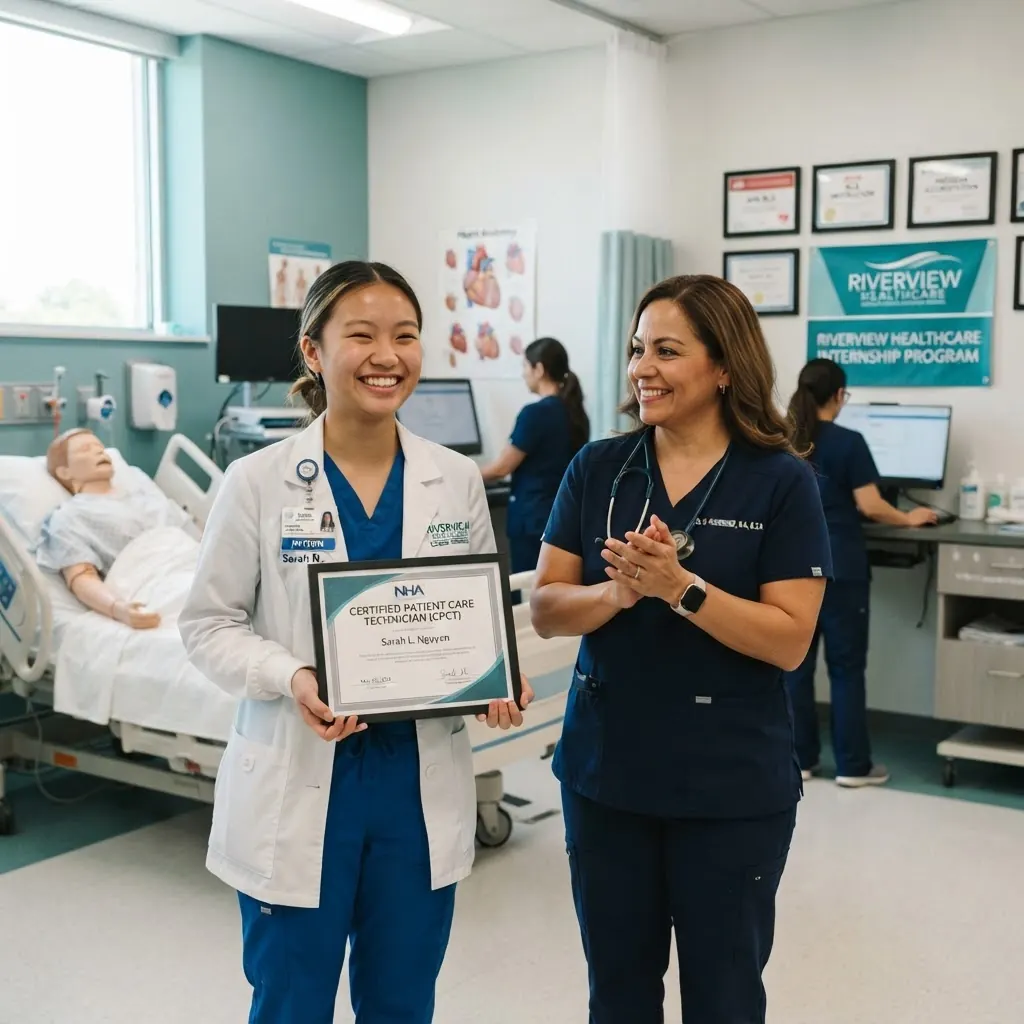
- Hospital department rotation tour (MS). Students rotate through three departments (lab, imaging, patient transport) and write a one-page comparison.
- Clinic job shadow (HS). A half-day shadow of a medical assistant, ending with a structured reflection on daily tasks and required credentials.
- Long-term care volunteer placement (HS). Recurring placement doing non-clinical resident activities under a supervisor.
- Clinical internship tied to a certification course (HS+). Supervised clinical hours connected to a credential program such as CNA, where the state allows it.
- Public health data project (HS). A county health department gives students anonymized public data to analyze and present.
Information Technology
- Help desk "reverse mentoring" (MS/HS). Students run a tech-help table for seniors at a library, supervised by library staff.
- School-based help desk (HS). Students staff a ticket queue for the school's device program, tracked like a real service desk.
- Client website build (HS). A team builds or rebuilds a site for a nonprofit, with a scope document, client meetings, and a handoff.
- IT internship with a managed service provider (HS+). Device imaging, inventory, and ticket triage under a technician.
- Cybersecurity awareness campaign (HS). Students design phishing-awareness material for a local business and present it to staff.
Manufacturing and Engineering
- Plant tour with a problem to solve (MS). Before the tour, a plant manager shares one real bottleneck; students propose fixes afterward.
- Engineering job shadow (HS). A day with a design or process engineer, including a design review meeting.
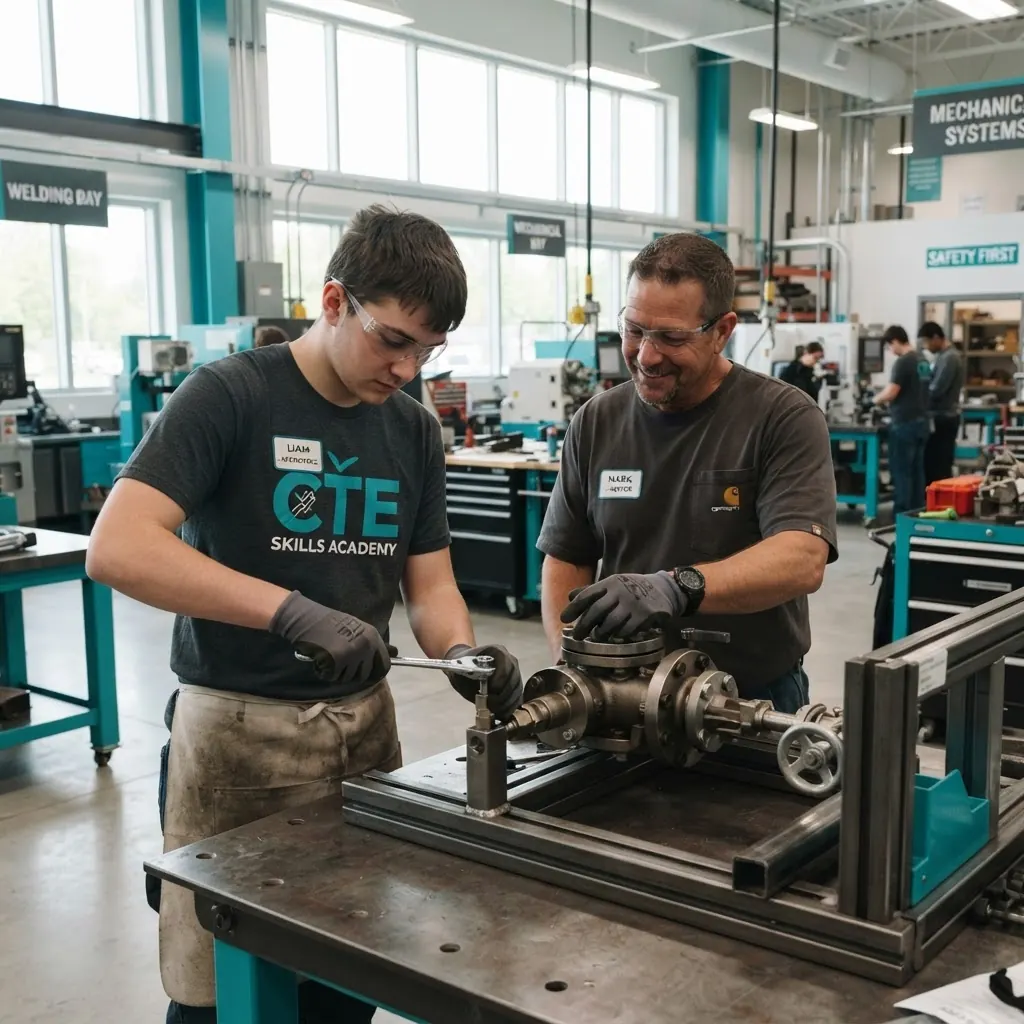
- Industry-sponsored design challenge (HS). An employer brings a real part or fixture problem; students prototype in the school makerspace.
- Pre-apprenticeship placement (HS+). Paid or unpaid work aligned to a registered apprenticeship program. See the DOL's Apprenticeship.gov for how registered programs work.
- Quality-control internship (HS+). Students run measurements and log results under a QC technician.
Construction and Skilled Trades
- Trades career fair with hands-on stations (MS). Students try basic tool tasks at stations run by local contractors.
- Habitat-style build day (HS). Supervised volunteer build day with a nonprofit. Check age limits for tools and sites.
- Estimating project with a contractor (HS). Students take a real (past) project and produce a materials estimate, then compare it with the contractor's.
- Youth apprenticeship (HS+). Structured, paid on-the-job learning plus related instruction, where your state has a youth apprenticeship program.
Hazardous-occupation limits matter here. Many construction tasks are restricted for workers under 18 under federal rules (DOL Child Labor).
Business, Marketing and Finance
- Mock interview day with local employers (MS/HS). Employers interview students for real-sounding roles and give scored feedback.
- School-based enterprise (HS). A school store, coffee cart, or print shop run with real inventory, pricing, and staffing.
- Marketing audit for a small business (HS). Students review a local shop's social media and website and present recommendations.
- Bank or credit union internship (HS+). Rotations through member services and operations.
- Nonprofit fundraising project (HS). Students plan and run a small campaign with a nonprofit's development staff.
Education and Human Services
- Elementary reading buddy program (MS/HS). Supervised weekly tutoring in a partner elementary school.
- Teacher cadet internship (HS). Students plan and co-teach lessons with a mentor teacher.
- Early childhood center placement (HS+). Supervised hours in a licensed childcare center, where state rules allow minors.
- Community needs assessment (HS). Students survey residents for a city agency and present findings.
Agriculture, Food and Natural Resources
- Farm or greenhouse visit with a soil test (MS). Students collect samples and learn what the results mean for planting.
- School greenhouse enterprise (HS). Students grow and sell plants, tracking costs and revenue.
- Veterinary clinic job shadow (HS). Shadowing a vet tech, with a reflection on credential paths.
- Conservation district internship (HS+). Field data collection and outreach with a conservation agency.
Hospitality and Culinary
- Restaurant kitchen tour and tasting critique (MS). Students observe service and analyze a menu.
- Catering a school event (HS). Culinary students plan, cost, and execute a menu for a real event.
- Hotel rotation internship (HS+). Front desk, housekeeping management, and events rotations.
Arts, Media and Communication
- Media day with a local station or studio (MS/HS). Students see production roles and help on a small segment.
- Client design commission (HS). A local organization commissions a logo, poster, or video from a student team.
- Theater tech crew placement (HS). Students work lighting or sound for a community theater production.
Public Safety and Government
- Public safety career day (MS). Fire, EMS, and dispatch professionals run scenario stations.
- Municipal internship (HS+). Students support a city department project, such as a parks inventory or permitting process review.
Work-Based Learning Project Examples (When Placements Are Scarce)
Not every student can get to a worksite. Rural programs, students without transportation, and younger students often need work based learning ideas that bring the employer to the school. Several examples above work this way: #5, #8, #13, #18, #22, #37. The pattern is the same each time:
- A real client with a real problem.
- A defined deliverable the client will actually use or review.
- Employer touchpoints at kickoff, midpoint, and final presentation.
- A reflection tied to the student's program of study.
If you need a starting point, WBL Tracker's free WBL Project Generator produces project ideas by pathway.
Turning an Example Into a Documented Experience
An idea becomes a WBL experience when it's planned and documented. For each example you adopt, decide:
Before the experience
- What the student is expected to learn (see our WBL plan template).
- Which forms are required: training agreement, parent consent, safety orientation. Our free templates include a training agreement, timesheet, and employer evaluation.
During the experience
- How hours are logged and who verifies them.
- When the coordinator checks in.
After the experience
- How the supervisor evaluates the student.
- Where the signed documents and hours live for reporting.
That last question is where many programs lose time. WBL Tracker keeps it in one place: student tracking for each student's placements and hours, opportunity tracking for every employer and placement, time logs that supervisors verify, and built-in e-signature with signed documents stored in each student's account.
FAQ
What are examples of work-based learning for students?
Common examples include job shadows, internships, school-based enterprises, client projects, mock interview days, pre-apprenticeships, and youth apprenticeships. The right mix depends on grade level and pathway.
What are good work-based learning ideas for middle school?
Low-commitment, high-exposure activities work best: workplace tours with a problem to solve, career days with hands-on stations, and mock interviews. Check your state's guidance on what counts as WBL at that level.
Can a classroom project count as work-based learning?
In many states, a project with a real employer client, defined deliverables, and employer feedback can count toward WBL, but definitions vary.
Do students get paid for work-based learning?
Some experiences are paid (co-ops, apprenticeships, many internships) and some aren't. Paid or unpaid status involves federal and state labor law. Review DOL guidance and your state's rules.
Plan Your Next Placement
Want to see how a district keeps 40 kinds of experiences organized without 40 spreadsheets? Book a demo of WBL Tracker and we'll walk you through it in 30 minutes.

Students collaborating in a work-based learning environment
About the Author
WBL Tracker Team
Work-Based Learning Specialists
The WBL Tracker team consists of former educators and coordinators who understand the challenges of managing work-based learning programs. We're dedicated to helping schools save time and improve student outcomes.
Ready to Transform Your WBL Program?
Join coordinators who are saving 10+ hours per week with automated tracking and compliance reporting.